Showing posts with label Cookstoves. Show all posts

Friday, December 17, 2010

Clean Cookstoves: Inexpensive Solution to Maternal Mortality

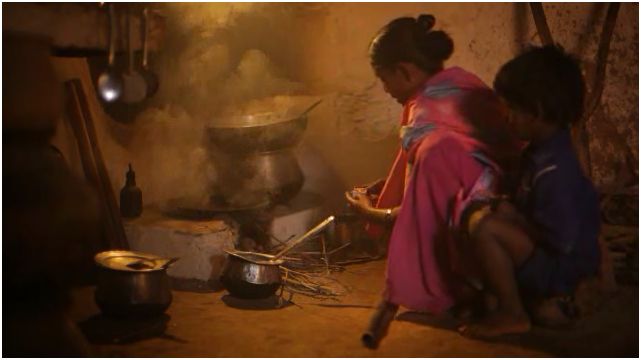
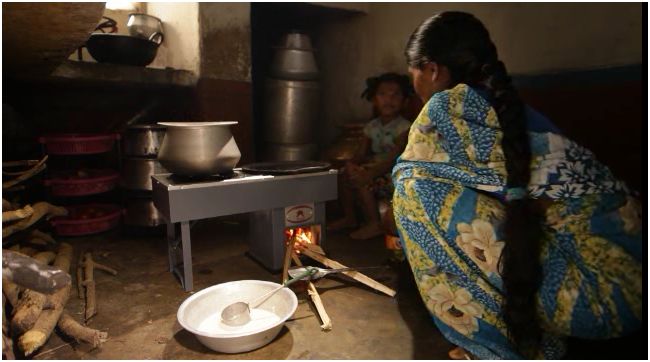
shell foundation Health professionals from various medical institutions and organizations at  a conference organized by the University of Delaware made the point that high-tech developments have reduced maternal and infant mortality in developed nations while suggesting that solutions for attaining less maternal mortality in developing countries is available and is inexpensive. Health experts stated that low-cost clean cookstoves can significantly reduce deaths in poor nations, where women typically cook over open fires in enclosed spaces with babies and young children nearby. Cleaner cookstoves will reduce the exposure to toxic smoke from the stoves and thus prevent a  lot of respiratory diseases and hence, a better health for both the mother and the child.
  
These were among the issues discussed by close to 250 health professionals from various medical institutions and organizations attending a conference organized by the University of Delaware and sponsored by the Delaware Health Sciences Alliance(DHSA) to address women and children’s health research as per a report in  the UDaily.

The meeting aimed at finding same ground for formalized collaborations, to highlight areas of research which have precarious mass being affected and to meet the needs of  the communities at large which effect the health outcomes.

The central discussion was on reproductive health of women with regard to maternal mortality. Sarah Berga, M.D., the James Robert McCord Professor and Chair of Reproductive Endocrinology and Infertility at Emory University School of Medicine, cited challenges like maternal mortality, substandard adolescent reproductive health, affordability and access, and a highly variable level of health literacy which results in a substantial number of cases of maternal mortality every year in the United States.

Photo Courtesy: UDaily

Read the full story on: DHSA draws diverse crowd to discuss women and children's health research
Read More..

Cancun Talks Pave Way for Environmental Benefits

smoke in the kitchen
The UN Climate talks in Cancun, Mexico, wrapped up with some important developments leading the world on a path towards constructive global action on climate change, United Nations Foundation President Senator Timothy E. Wirth has said in a statement.

The UN Climate Agreements, endorsed by 193 countries, are seen to be the "building blocks for global action" by the UN Foundation that will advance the world toward improvements on key environmental issues, such as deforestation, technology cooperation, adaptation, and financing. The agreements are aimed at persuading the countries to practice low-carbon development plans and strategies, which will ensure economic strengthening and national security whilst protecting the environment.

 "The agreements themselves, as well as the resulting measures that will be implemented around the world, will build confidence in the multilateral negotiations process. These efforts will deliver environmental benefits and pave the way for additional agreements on energy efficiency, renewable energy, and the reduction of powerful warming agents such as methane, refrigeration gases, and black carbon from diesel engines and cookstoves.”, said Timothy E Wirth

Wirth said, “The evidence of a destabilized climate is everywhere – from the global temperature record to the shrinking Arctic ice cap to the increasing incidence of extreme weather events. Negotiators in CancĂșn made important progress toward cooperative action to combat the destructive results of climate change. As the CancĂșn Agreements are implemented and the world looks at ahead to two more rounds of talks, we should continue the strategy of developing the building blocks that will move us to a greener energy economy.”

For the full statement: Statement by Timothy E. Wirth, President, United Nations Foundation
Read More..

Tuesday, December 7, 2010

The Jompy Stove: World Challenge Finalist

The Jompy Stove which allows boiling water and cooking simultaneously made it to the 12 finalists for the 6th World Challenge, shortlisted by BBC World News and Newsweek, in association with Shell.

The World Challenge is a global competition aimed at finding projects or small businesses from around the world that have shown enterprise and innovation at a grassroot level. This year, there were 800 nominations, 12 finalists, one winner and two runners up. The finale this year of World Challenge 2010 was filmed in Amsterdam with Zeinab Badawi announcing the winners.

The Winner of the Challenge is a project from Philippines and the two runners up projects are from Peru and Guatemala.

The Jompy Stove is a lightweight and inexpensive stove-top device that sits between a cooking pot or an open flame to rapidly heat water. Invented by David Osborne, a plumber from Scotland, this simple technology could save millions who die from drinking contaminated water. The Jompy is a win-win technology, where householders can cook a meal whilst killing bacteria in dirty water at the same time. Gravity pushes the water through the Jompy, and it even works on simple three stone fires, making it perfect for use in the bush. It's now being supplied to Uchumi supermarkets in Kenya.

The Jompy is a highly effective water boiler that allows the consumer to carry out two tasks at the same time: boiling water whilst cooking.This unique product (weighing just 600g) can boil 1 litre of water every 45-60 seconds with the water reaching temperatures of up to 86 degrees, drastically reducing the amount of fuel required; as well as providing a means of clean hot water to improve sanitation.

Photo Courtesy: World Challenge 
Website:  "The Jompy" Water Boiler
Read the full story on:  World Challenge Finalists Announced;
Read More..

Wednesday, October 27, 2010

Kenya's Challenge Of Shifting To Modern Energy

Indoor Air PollutionThere is need to encourage users to shift to modern energy sources by encouraging marketers  as well as providing incentives to increase production and use and creating an enabling environment to achieve low and affordable prices for fuels, appliances and equipment, gadgets and apparatus among the majority of the citizens, says a recent study in Kenya. The Kenya Institute for Public Policy Research And Analysis in its recent study "A Comprehensive Study and Analysis on Energy Consumption Patterns in Kenya" says that since fuel wood has been the main fuel in the rural areas, there is need to encourage and enforce adoption of wood saving cookers, outside the traditional three stones.

According to the study, energy consumption pattern in Kenya portrays more of fuel stacking than fuel switching, where households are observed to be using multiple fuels (the use of more than one or various fuels to meet different energy demands). Fuel switching occurs when a household opts or chooses to completely shift and use a new fuel. (fuel mixes). This is classically the case when there isnt a significant increase in incomes and the tendency is for multiple fuel use.

The analysis also revealed that affordability was the main reason why majority were not willing/ able to pay for improved energy services for example kerosene, electricity and charcoal were viewed to have high cost. Lack of information deterred households from willing to pay for improved LPG products and services, while petrol and lubricants, were viewed to be dangerous, unsafe and of poor quality.

The findings of the study carried out by the Kenya Institute for Public Policy Research and Analysis (KIPPRA) on A Comprehensive Study and Analysis on Energy Consumption Patterns in Kenya”, commissioned by the Energy Regulatory Commission (ERC) point out that fuel usage is as much a result of household size as the geography of presence but not necessarily linked to an inherent movement towards cleaner fuels.

According to the study, as the household size increases, the budget share on kerosene declines. This could be explained by the fact that as the household size increases, the household switches to other fuel types such as charcoal, fuel wood and even LPG to meet increased demand for energy for example in food preparation.

From the results, households in urban areas are likely to demand more kerosene than those in rural areas. This is expected since rural households have at their disposal other types of fuels such as fuel wood and charcoal.

The study says about 70% of the consumers use biomass while 30% use other fuels. This supports well known studies that biomass provides 70% of the energy requirements. The study showed kerosene to be mostly used for lighting (52%) while biomass was widely used for cooking (60%).  Fuel wood had the highest energy budget share on average for both rural (11.6 %) and urban (9.34 %) compared to the other fuels.

The energy choice model results showed that demand for cooking fuels such as fuel wood, charcoal, kerosene, electricity and liquefied petroleum gas(LPG) are driven by certain key factors and vary depending on whether the household is located in rural or urban areas. The key determinants for kerosene choice at the household were occupation, total energy expenditure, household size, fuel wood price, education level and price of LPG. With regard to fuel wood choice, important factors included the price of fuel wood which has a negative coefficient, household size and total expenditure. The key determinants of choice for use of charcoal included household size, price of charcoal, price of fuel wood, education level, and both formal and informal employment.

Photo courtesy: United Nations Environment Program
Read More..

Saturday, September 25, 2010

The Silent Killer Now A Global Concern

The Launch of the Global Alliance for Clean Cookstoves has resulted in the issue -- and the solutions -- getting reported and discussed widely.

room to breathe

The New York Times in its Editorial "Cleaner, Healthier Cookstoves" makes that point that "Researchers have long known of the risks of primitive indoor stoves — including pneumonia in children, lung cancer, pulmonary and cardiovascular disease. They have also known that these stoves contribute to global warming by producing large quantities of fine-particle soot normally associated with diesel engines and burning down forests.

The replacement stoves are relatively small, simple cylindrical devices costing less than $100 and capable of capturing between half and 95 percent of the harmful emissions. The program will sensibly not use the money to buy and ship stoves but, rather, to create small manufacturing companies close to the target populations — creating new jobs in the process. This is an ingenious and overdue response to a global problem."

Says The Economist in its write up, "The best reason for hope may lie in the new-found awareness of market forces among governments and the UN crowd. Pressed on this point, Mrs Clinton says emphatically that the new stoves “must not be given away”. As with anti malarial bed nets, she argues, charging a little makes people value and use them properly.

That will come as good news to the small army of entrepreneurs in the developing world now coming up with novel business models to sell and service the cooking stoves. One such innovator is Suraj Wahab of Toyola, a start-up selling some 60,000 stoves a year in Ghana by offering micro-credit. His advice to the new UN coalition is “please don’t offer handouts and don’t give away stoves.”

The Guardian blog reports Simon Bishop of Shell Foundation saying "Having a sitting US secretary of state say that the world needs to focus on harmful cookstove smoke - which kills 1.9 million people a year globally - is a huge, massive boost to an issue that has for too long been seen as a low priority by the global community."

Improved Cook Stoves
The remarks by Achim Steiner, UN Under-Secretary General and UN Environment Programme (UNEP) on the launch of the Global Alliance for Clean Cook Stoves was echoed in the African press, "There have been cook stove initiatives before—some have worked and some have not. The expertise in this room knows why—and it is this experience and these skills that will make this alliance a success. Indeed, when I look at the faces out there and the organizations you represent, I seesuccess stories everywhere. US EPA is partner along with the government of the Netherlands and UNIDO and UNEP among others in the Partnership for Cleaner Fuels and Vehicles—phased lead out of petrol in Africa, and almost everywhere else in around three year. The UN Foundation and Shell Foundation, partners in for example the Indian Solar Loan project that through working with banks assisted 100,000 people in rural India to access solar power."

The Huffington Post writes "This extraordinary coalition has come together around one core belief: The time is right for the world to focus on this issue. The Alliance needs others to step up. The global community needs to make cookstoves a priority. If it does, progress will be made toward the MDGs, millions of lives will be saved, and the global environment protected. Cooking shouldn't kill. It shouldn't kill women and children. It shouldn't kill the environment."

Morgan Stanley in a press release announced that it is a Founding Partner of the Global Alliance for Clean Cookstoves. "Given our long track record of supporting pediatric health initiatives and our commitment to protecting the environment, we are very proud to be a Founding Partner of the Global Alliance for Clean Cookstoves," says Tom Nides, Chief Operating Officer of Morgan Stanley. "We look forward to committing our intellectual capital to this effort and working with our Alliance partners to address this pressing issue in the months and years ahead."


Roomtobreathe
A number of developments indicate that there is increasing momentum for the dangers of traditional cookstoves to be successfully addressed. These include advances in stove design, testing and monitoring; the potential of carbon financing to reduce stove costs; and commercial entrants with significant production capacity.

"While the harmful and tragic effects of traditional cookstoves have long been known, we believe the right conditions are in place to address this problem more effectively than ever before," said Audrey Choi, Head of Global Sustainable Finance at Morgan Stanley. "We look forward to contributing Morgan Stanley's intellectual capital to solving environmental and health problems that require market-based solutions and economic insight."

Indoor Air Pollution

Noted the BBC commenting on the launch of the Alliance "It is believed to be the first major attempt to tackle the issue worldwide. The project will attempt to build on national programmes already underway in India, Mexico and Peru. It aims to introduce modern low-pollution stoves to the homes of 100 million poor people by 2020. Clean stoves run on biomass (with chimneys and clean-burn mechanisms), or gas, or on solar power. The stoves programme would help to protect poor people from eye disease, lung disease and cancer; save forests from being ravaged for fuel; reduce CO2 emissions and reduce emissions of black smoke, which also contributes to global warming. But it is a huge challenge for a global partnership to deal with the scattered homes of the estimated 3 billion poor people who cook on stoves or open fires."

SNV a Founding Partner of the Alliance in a press release quoted Dirk Elsen, SNV Chief Executive, stating, "The environment, renewable energy, and improved welfare of women and children are clearly defined SNV strategic concerns and each of our projects around the world is undertaken with them in consideration. Therefore, we are very excited about joining the Global Alliance for Clean Cookstoves whose mission and goals fit in perfectly with these SNV strategic priorities. As a Founding Partner in the Alliance, we intend to take an active role in helping define standards, encourage research, and set the vision for the global deployment of improved cookstoves."

SNV has successfully promoted the implementation of biogas, biofuels and clean cookstove programmes in Africa, Asia and Latin America. It is committed to using its expertise in developing market-based solutions and working with the private, public and non-profit sectors to ensure the worldwide dissemination of bio-energy technologies, thereby improving the health of women and children as well as mitigating the impact of climate change. As a part of the Alliance, SNV can leverage this experience to scale up efforts in the clean cookstove sector, which is reaching a "tipping point" thanks to advances in cookstove design and testing, new research on harmful effects of inefficient cookstoves, an increased awareness of the need to address climate change challenges and ability to reach scale via carbon finance.

The Christian Science Monitor noted that "the idea is not simply to flood poor countries with a one-size-fits-all cooking alternative – an approach that hasn’t gotten very far in the past – but rather to consult finicky local tastes and use local markets to develop and distribute different cookstoves for different regions and cultures. The objective: create cleaner, healthier, environmentally sound and locally adapted stoves that women will want."

Environment News Service quotes UN Foundation President Timonthy Wirth saying "Energy is the essential enabler of the Millennium Development Goals," said United Nations Foundation President Timothy Wirth. "Broader access to electricity and modern fuels doesn't just provide light or move machinery. It powers education, health care, and prosperity, and through sustainable technologies, such as solar panels and clean and efficient cookstoves, lives are saved and our environment protected."

Roomtobreathe
"Cooking a meal shouldn't be hazardous to your health," Wirth said. "Cookstoves that reduce fuel consumption and operate cleanly will save lives, prevent disease, provide more time for women and girls to devote to schooling and earn money and reduce environmental degradation. That addresses almost all of the MDGs."

"For 10 years we have been helping to deliver market-based solutions to selling clean cookstoves in India, China, Central America and Africa. The sector has made great progress," said Shell Foundation Director Chris West. Still, he said, "Stove manufacturers face numerous barriers to successfully selling clean cookstoves at scale, and just like any infant industry they need support to address those barriers."
Read More..

Monday, September 6, 2010

Cornell Research on Biochar and Cook Stoves Gets Funded

Improved cook stoves
Research projects of the Cornell University for making richer Biochar through a combination of development of micro-organisms and development of cookstoves that would produce biochar while eliminating indoor emissions has received funding from the Basic Research to Enable Agricultural Development (BREAD), which is supported by the National Science Foundation (NSF) and the Bill and Melinda Gates Foundation.

According to  Cornell University's Chronicle Online, two Cornell-based research projects -- one that boosts the soil-building effects of biochar for plants and another that harnesses genomics technology to accelerate maize and sorghum breeding in Africa by three-to-four times -- have each been given more than $1.6 million in grants.

The first project aims to develop microorganisms (inoculants) to add to biochars, produced when organic waste is burned at low temperatures without oxygen, to improve soil health in small farms in Kenya, where soil degradation is directly linked to food insecurity, hunger and poverty.

"Biochars act like a sponge or microbial reef where microorganisms like to live, proliferate and hide from predators," said Johannes Lehmann, associate professor of soil biogeochemistry, who leads the project. The inoculants would infect plant roots and support mycorrhizae fungi and other bacteria to provide plants with such essential nutrients as nitrogen and promote growth.

Lehmann's group also seeks to develop stoves that would be made locally in Africa. The stoves would produce biochar while they were used for cooking and would eliminate indoor smoke, a serious health consequence of wood stoves in Africa. Also, farmers would be able to use such on-farm waste as shrubs, grasses and crop residues -- rather than harder-to-find wood -- to fire up the stoves.

The $1.6 million project also includes outreach to spread information and protocols about biochar, inoculants and cook stoves through workshops, presentations, CDs and publications.

The group includes researchers from Cornell's Departments of Crop and Soil Sciences, Mechanical and Aerospace Engineering and Applied Economics and Management; the University of California--Irvine; World Agroforestry Center of Kenya; and the University of New South Wales, Australia.

To more than triple breeding cycle rates to develop new maize and sorghum varieties in sub-Saharan Africa, researchers received $1.7 million to apply new molecular breeding technology to sequence trillions of base pairs from 12,000 breeding lines of maize and then sorghum. They hope to winnow the lines down by 90 percent, retaining only those that hold the most promise for drought tolerance and nitrogen efficiency.

Read the full story $3.3M in grants to improve soil, plant breeding in Africa
Read More..

Sunday, May 2, 2010

Cooking Stoves and Cooking Styles: The India Challenge

There is sufficient support to the thesis of sub-cultural nature of cooking and cooking stoves in traditional stoves which makes the task of finding the perfect, one-size, all purpose stove that much more difficult. Bringing home the point once again was a research by Centre for Development Finance (CDF) from the non-profit Chennai-based Institute for Financial Management and Research.

Writing in the India Development Blog, researchers of IFMR point out once again the importance of putting the user at the center of all cook stove solutions.

CDF's Rural Market Insight team conducted a brief field study of cooking practices across 5 states in India. The need for user-centered design is presented in a video report put together by the Rural Market Insight (RMI) team.


User Behavior Insights from Pooja Bhatia on Vimeo.


In order to gain a base level understanding of the challenges associated with cook stove design and adoption, CDF’s Rural Market Insight team conducted a 6-week scan of cooking practices across five states in India to take a fresh look at cooking practices to determine what factors do, and should, influence cook stove design.

According to the IFMR researchers, "despite impressive gains that have been made in improving the emissions performance of stoves and driving their cost down, it seems that many improved cook stoves still do not seamlessly fit into the lives and routines of the user. This is something we have seen time again throughout many of our field visits as well as user experience research we recently completed in an urban context.This can, and has, resulted in less than ideal user adoption of improved cook stoves. Even those using these improved stoves are sometimes using them differently than expected, so that the performance in the field is unlike the results that were concluded in the laboratory."

"With the many advances in technical design and performance of improved cook stoves, we feel it is time to turn our collective attention to user adoption, which necessitates putting the user at the centre of the design process."

Earlier in the year, the team had covered a 6-week long user test of the Leo Double Pot stove from Prakti Design. During this test, CDF deployed a brand new stove and tracked the subject’s use of the stove twice a week for six weeks. Prakti Design, located in Tamil Nadu, India, designs innovative commercial and household biofuel cook stoves.

The researchers found that users not only had different perceptions, they were wilfully subverting the design principles of the stove to meet their particular habits and perceptions.

The research team notes, "From our observation, we identified 3 key elements where user perception differed from our assumptions. For Rani, smoke is supposed to be good and not bad, because she views smoke as a repellant for the mosquitoes living in the nearby waste pile. Leftover ash from the cooking is either used for cleaning vessels or just discarded, so unless there is a big pile of ash inside the chulha, preventing the entry for the firewood, there is no incentive to clean it and thereby improve the efficiency of the stove. Rani insists on using more firewood because for her Prakti Leo stove is taller than a traditional chulha and so you need a bigger fire to reach the pot."


The result was user modifications: "Through frequent follow-ups, we were able to track the evolution of user modifications. First it started by her saying that she didn’t like the metal ‘pot reducer’ ring (which is used to reduce the flame from reaching the pot in the primary burner and enables some heat transfer for the secondary burner). Next Rani placed 3 stones above primary burner to raise pot and let the fire go around the pot. Finally, she purposefully broke the metal pins off of the exhaust plate, and placed that over the primary burner, resulting in flames exiting the primary burner, but making the secondary burner useless.
Potential reasons for modification could be that the user is used to cooking on a single-burner chulha and didn’t understand the thermodynamics of the stove."
Read More..

Thursday, April 29, 2010

Secretary Clinton says Cookstoves among the Big Ideas that Empower Women

US Secretary of State Hillary Clinton in her address at the Breakfast with Women Entrepreneurs Attending the Presidential Summit on Entrepreneurship in Washington DC launched the Secretary’s Innovation Award for the Empowerment of Women and Girls.

Talking about the kind of ideas that the Fund will support to scale up enterprises, she referred to the program on cookstoves that help women by reducing fuel usage and reduces the burden of gathering firewood. "We’re working on a cook stove project so that we can provide safe and effective cook stoves for women so they don’t have to travel for miles to get trees and branches and look for scrub to light their stoves to feed their families. "

Excerpts from Ms Clinton's Remarks on April 28:

"This morning, I’m pleased to outline several new avenues we are pursuing to expand opportunities so more women can turn their entrepreneurial dreams and innovations into successful businesses that generate income for themselves and their families, create jobs, expand markets, and fuel progress in their communities..."

"First, through a program called Tech Women, we will enhance the technological capacity of women in seven Muslim majority countries, promising entrepreneurs in the tech field will be paired with American mentors and given four to six weeks of training in American tech centers such as Silicon Valley. (Applause.)

Second, we are working with Japan, the chair of APEC this year, to organize an APEC women’s entrepreneurship summit this fall in Japan, focusing on policy, human resources and financing issues. The aim is to galvanize the Asia-Pacific region to unleash the potential of women entrepreneurs and business leaders, and we’re very pleased that the 1,000 – the 10,000 Women’s Initiative, sponsored by Goldman Sachs, has agreed to be a sponsor of the summit. And we thank you so much for that. (Applause.)

Third, today we are launching the Secretary’s – that’s me – the Secretary’s – (laughter) –International Fund for Women and Girls. This public-private partnership will provide high-impact grants to NGOs working to advance the economic, social, and political progress of women. The women’s fund will bring together the resources and expertise of both the public and the private sectors to invest in effective and innovative solutions for issues like economic empowerment, climate change, combating violence against women, and improved access to education and healthcare..."

"I will never forget being in Managua, Nicaragua and there was a little television set in the corner of this market, and I was talking to women who were part of a microcredit organization. All they wanted to talk to me about was my visit to India, to the Self-Employed Women’s Association, which they had seen on their TV in Nicaragua, and they wanted to know what that was like.

A few months later, I was in Cape Town, South Africa with a group of women who were originally squatters and then became builders of their own communities, scraping together the money to buy the land, then to get the construction material, and they, too, wanted to know about the women that I had met elsewhere and what they could learn from them. We want not to reinvent the wheel every single time. If you’re facing obstacles, we want to help you overcome them. (Applause.)

And finally, I’m delighted to announce the creation of the Secretary’s Innovation Award for the Empowerment of Women and Girls. Through this effort, we hope to build on pioneering approaches to empowering women politically, economically, and socially around the world. This award will be funded by the Rockefeller Foundation – we’re going to hear about it in a minute – and it reflects the State Department’s increased emphasis on public-private partnerships as a way to address cross-cutting global challenges, particularly those affecting women and girls.

Now, we hope to receive entries that describe how specific innovations have improved the lives of women and girls and proposals for how they can be scaled up and applied more broadly. These entries will be reviewed by an eminent panel of jurors, chaired by Ambassador-at-Large for Global Women Issues Melanne Verveer, and Rockefeller Foundation President Judith Rodin. The panel will recommend the first two recipients of the award in 2010, both of whom will receive up to a $500,000 grant to fund their programs. (Applause.)

And there are so many ideas that can fit into this, ideas – I remember being in Senegal and going out into the country to see a new kind of well that made it possible for women to get water in their own village instead of having to walk for hours. We’re working on a cook stove project so that we can provide safe and effective cook stoves for women so they don’t have to travel for miles to get trees and branches and look for scrub to light their stoves to feed their families. We’re looking for ways to end domestic violence by making it clear that it is a crime, ways to partner to end FGM, which is a health hazard to women, especially young girls, but then later in their reproductive years.

We have so many ideas that are not just, well, have a woman run for office or have a woman run a business, but change the conditions in which women live, change the attitude about sending girls to school, provide a fund so that girls have access to clean restrooms, so that they continue to go to school at the end of primary school when it becomes more difficult for them to do so if there is no safe, clean restroom. There’s so many ways that we can empower women. So we want to unleash the entrepreneurial creative imagination of all of you to help us."
Read More..